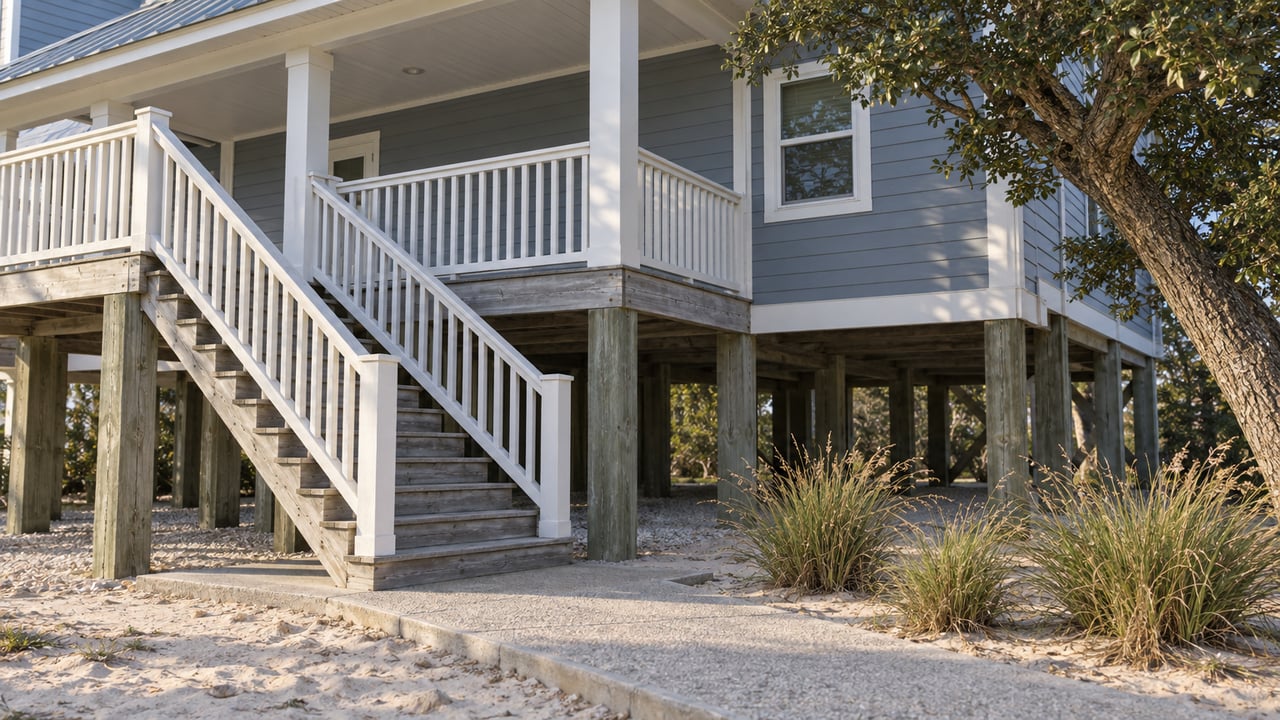
Nags Head's Median Price Is Up. So Why Are There More Homes for Sale?
October 8, 2026
October 8, 2026
On July 30, Island Free Press reported that Nags Head's single-family median price for June was down 21.2% from June 2025, at $825,000, on 25% fewer closings. Sixteen days later, the same outlet reported the town's year-to-date detached-home median through July was up 10%, to $840,000. Both stories drew on Outer Banks Association of Realtors data, and they described the same town in the same summer.
Both numbers are accurate. Neither one tells you what a particular Nags Head house is worth. If you're comparing Nags Head with Kill Devil Hills or Kitty Hawk this fall, a different figure in the same report matters more for your offer, and it points the other way from the headline.
Here is Nags Head's detached-home market through July 2026, compared with the same seven months of 2025, according to the Island Free Press recap of OBAR figures published August 15:
| Measure, January–July | 2025 | 2026 | Change |
|---|---|---|---|
| Closings | 92 | 83 | down 9.8% |
| Median price | n/a | $840,000 | up 10% |
| Average price | n/a | nearly $1.08 million | up 15.5% |
| Homes for sale | n/a | 64 | up 39.1% |
| Months of supply | 3.7 | 5.6 | up |
Eighty-three sales across seven months comes to roughly a dozen closings a month. At that pace, one oceanfront closing or a few soundside cottages landing in the same month can swing the median by a lot. That is how June's median could come in more than 21% below June 2025, and how July's closings could then jump 45.5% over July 2025. The association itself warns that percentage changes in its community reports can look extreme because some markets have relatively few transactions.
A median is the price of the house in the middle of whatever sold. If the homes that sold this year were larger, closer to the ocean, or newer than last year's, the median rises even when no single house gained a dollar in value. Fewer sales, more listings, and a higher median all at once is the pattern you'd expect when the median is tracking a change in which homes sold. No published 2026 breakdown splits Nags Head sales by price band or bedroom count, so that explanation can't be confirmed. It does fit everything else in the data.
The table holds a second clue. The average price rose 15.5% while the median rose 10%. An average moves toward its largest values, so when it outpaces the median, the top of the price range is pulling harder than the middle. In Nags Head through July, the expensive sales did more to lift the numbers than the typical sale did.
That matches what the Outer Banks Visitors Bureau has been saying about vacation rental demand all year. In February, executive director Lee Nettles told the Dare County Tourism Board about a "bifurcation of spending" among visitors. "The larger homes, 14 bedrooms plus, are actually ahead of pace compared to previous year, while homes of one to three bedrooms, four to eight are a little bit behind the pace that we saw last year on the bookings," he said.
By June, he was telling Axios Richmond that large luxury homes were booking at their usual rate and speed while smaller rentals were sitting longer. He added that travelers were booking later and choosing shorter stays.
These comments describe the Outer Banks as a whole and cover rental bookings, not home sales. For a town where many buyers weigh rental income, though, the link is direct. When the big-house rental segment is holding its pace, buyers can underwrite big houses with more confidence, and those are the sales that push an average up.
Nags Head had 64 detached homes for sale at the end of July, up 39.1% from a year earlier. Months of supply rose from 3.7 to 5.6. Months of supply estimates how long the current listings would take to sell at the current pace of sales. Going from under four months to more than five and a half means a buyer this fall has more listings to compare and more time with each one than a buyer had last summer.
For a buyer comparing towns, this is where the median can mislead you during a negotiation. A seller pointing to a 10% gain in the town median is describing a different group of houses than the one on your shortlist. The more useful comparisons are recent sales of homes like the one you're considering, plus the number of similar homes now competing with it. Across all property types on the Outer Banks, homes that closed in July spent a median of 63 days on the market, down from 73 a year earlier. No Nags Head-specific days-on-market figure was published, so ask for that number on each listing you're seriously considering.
The central beaches didn't move together this year. Through July 2026:
Kill Devil Hills looks most like Nags Head: fewer sales, a rising median, and more listings. Kitty Hawk shows the opposite pattern, with much more activity and a lower median. Ranking these towns by median puts Nags Head on top. By supply, Nags Head and Kill Devil Hills each added about two months, so buyers in both towns have noticeably more room than they did a year ago, even though the medians in both went up.
For a buyer planning to rent the home out, the countywide July numbers show a market where rising rates are offsetting fewer bookings. Paid guest nights at Dare County short-term rentals fell 3.9% from July 2025, while the average daily rate rose 3.2% to $734. On the Visitors Bureau's northern beaches figures, adjusted paid occupancy was 87% and the average rate was $756. Island Free Press reported Nags Head's own gross lodging receipts at $39.41 million for June, up 3.1%, and up 0.4% for the year through June.
Revenue that holds roughly flat on fewer booked nights keeps the town's lodging totals steady. For an individual owner, the results depend on the size of the house. Combined with Nettles' comments on booking pace, a smaller cottage and a large group home are likely having very different years, even though both count in the same town median.
The town's side of carrying costs is set for the year. In the FY 2026–27 budget, adopted June 3, Nags Head kept its total tax rate at 23.2 cents per $100 of valuation: 21.2 cents townwide plus 2 cents for beach nourishment. It also raised water rates 5% on both base and volumetric charges. The budget sets aside $3.1 million for debt service on the recently completed $38 million beach nourishment project, which covered more than 10 miles of shoreline. It also includes $500,000 for zero-interest septic repair loans. For a buyer looking at an older home on septic, that loan program is worth asking the town about before closing. Your own tax, insurance, and lending questions belong with the appropriate professionals.
Is there August data yet? OBAR's FastStats tool lists August 2026 as an available period, so August figures exist there. The July figures above are the most recent ones covered by a local news recap, and OBAR's tool is the place to check Nags Head's August numbers.
Is anything changing in Nags Head's zoning that affects smaller homes? Possibly. On August 17, the Nags Head Planning Board unanimously recommended an optional cottage-court standard allowing one-story units of up to 1,000 square feet with a limited loft or mezzanine. It would not change unit counts, setbacks, parking, or lot coverage. The proposal is not yet adopted. The Board of Commissioners holds a public hearing on it on October 7, 2026.
Did prices drop in June or rise this year? Both statements are accurate for their own time windows. June alone showed a median below June 2025's on fewer sales. January through July showed a higher median on fewer sales. With so few closings, the time window you pick can change the answer.
If you're weighing a Nags Head home against options in Kill Devil Hills or Kitty Hawk, Ocean Pearl Realty can pull the recent sales and current competing listings for the specific homes on your shortlist. That way your offer rests on comparable houses instead of a town-wide median. Get in touch, and we'll go through those comparisons together.
This article is general information, not legal, tax or financial advice. Consult a qualified professional about your situation.
Stay up to date on the latest real estate trends.


Call us with any real estate questions or curiosities any day of the week!